
thumbnail image

Loop-to-Lead

  • Home
  • Workshop
  • Keynotes
  • Contact
  • 1:1 Session
  • …  
    • Home
    • Workshop
    • Keynotes
    • Contact
    • 1:1 Session
Contact Us

Loop-to-Lead

  • Home
  • Workshop
  • Keynotes
  • Contact
  • 1:1 Session
  • …  
    • Home
    • Workshop
    • Keynotes
    • Contact
    • 1:1 Session
Contact Us

Loop-to-Lead

  • You rely on them to deliver. But are they being considered for what comes next?

    They take on the hard work, keep things moving and rarely let you down. But when the next opportunity comes up, their name is not always the one that gets mentioned.

    See what may be happening
  • When reliable starts to become a ceiling

    You have people who take on the hard projects. Who keep things moving when it matters. Who get handed responsibility because you trust them with it.

    Some of them are quietly on their way out. Not because they are not good enough, but because their work keeps getting read as "dependable" rather than "leadership," and no amount of delivering seems to change it.

    When they leave, it looks like a personal choice. A different priority. A better offer.

    Often it is something else. A capable person who ran out of reasons to believe this place would ever see them differently.

    I call this a leadership recognition problem: the gap between someone demonstrating leadership and an organisation recognising them as ready to lead.

    The problem is not simply bias. It is how leadership gets interpreted.

  • How people decide what counts as leadership

    It is tempting to hear this as “our managers are biased.” But that framing is too blunt to show you where to intervene.

    What is happening is more ordinary, and more fixable.

    Every organisation makes choices about who gets the next opportunity, who gets backed, and who is seen as ready to lead.

    Between those two decisions sits something we rarely stop to examine: what people make of the work they see.

    What we rarely stop to examine is what sits underneath those decisions: what people make of the work they see.

    The same contribution gets read as “strategic” from one person and “supportive” from another. The same caution reads as “thoughtful” or as “not ready,” depending on who is being cautious. It gets harder still for people who do not fit the familiar picture of who becomes a leader.

    Usually, no one has decided that this should happen. It is simply one of those everyday judgement calls that can go unquestioned for a long time.

  • Why this matters for your organisation

    When this keeps happening, it does not stay an individual frustration. It starts to show up in ways the organisation can feel.

    Capable people burning out. Doing more to prove they are ready, getting more responsibility, without it changing the opportunities that come their way.

    Capable people going quiet. Still delivering, but no longer putting themselves forward, which can then be read as lower ambition.

    Capable people leaving. Taking the capability you helped develop somewhere else.

    Over time, the way someone is seen can begin to affect how they perform. Greater scrutiny, fewer second chances and repeated misrecognition can make people more cautious, less willing to take risks and less certain of the value of their own contribution.

    Those responses can then be read as further proof that the original judgement was right.

    And when that ends in departure, it becomes a pipeline problem too. The organisation loses capability it may never have realised was already slipping away.

  • How I work with organisations

    Loop-to-Lead™ can be brought into an organisation in different ways, depending on what you want people to understand, discuss or change.

    Workshops

    Workshops are for when you want people to work on the issue, not just hear about it.

    With groups of professionals, they bring a real situation from their own work, look at what may be shaping what happens next, and design one practical move to try.

    With leaders, HR and talent teams, the focus turns to the organisation itself: how contribution gets interpreted, who gets backed, and where decisions about development and opportunity may be reinforcing the same pattern.

    The aim is not more awareness. It is to leave knowing where to look, what to question, and what to try differently.

    In-company talks and lunch & learns

    Sometimes the first step is simply putting the issue on the table.

    In a talk or lunch & learn, I use everyday workplace examples to show why good performance does not always turn into the opportunities people expect, and how capable people can be overlooked without anyone setting out to overlook them.

    People leave with a clearer way to recognise the pattern in meetings, reviews and decisions about who gets the next opportunity.

    Workshops and in-company talks are available in Dutch and English.

    Let's talk about your team
  • The framework behind the work

    This work is built on Loop-to-Lead™, an evidence-informed framework I developed to understand why capable people can keep taking on more responsibility while the opportunities they want stay out of reach.

    It looks at what happens between the person doing the work and the organisation making decisions about what happens next. Instead of assuming the answer is simply for the individual to do more, it looks at how the work is seen, interpreted and backed.

    The framework brings together a systems perspective with research on influence, perception and how leadership gets recognised

  • Section image

    Keynotes and conference talks

    I speak at conferences, summits, panels and network events about why good performance does not always lead to the opportunities people expect, and how organisations decide who looks ready to lead.

    A talk gives people a different way to look at something they may already recognise from working life, but have never quite been able to name.

    One question runs underneath it all:

    How do organisations recognise leadership when it does not look like the leadership they already know?

    And for the professionals affected by those decisions:

    How do you move forward without simply doing more to prove you are ready?

    Most advice focuses either on the individual or on the organisation. My work looks at what happens between the two.

    Topics include why capable people can keep taking on more responsibility without getting the opportunities they want, how the same contribution can be interpreted differently, and how to build influence without formal authority.
    Invite me to speak
  • See the pattern in action

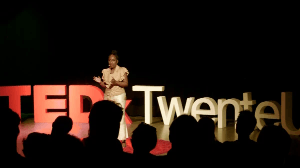
    In this excerpt from my TEDx talk, I show how one person can keep receiving trust and opportunity while another, equally capable person, gets further away from the opportunities they want.

  • Working with individuals

    I also work one-to-one with professionals who recognise this pattern in their own careers.

    The Loop-to-Lead™ Strategy Session is a focused 60-minute session to understand what may be shaping what happens next and identify one precise move to try.

    If that is what brought you here, you can read more on the Strategy Session page.

    Explore the 1:1 Strategy Session
  • Section image

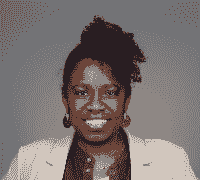
    I'm Phaedra

    I created Loop-to-Lead™ out of a question that kept following me through coaching, research and conversations about work:

    Why can capable people keep taking on more responsibility while the opportunities they want remain out of reach?

    My background is in communication, coaching and systems thinking, and much of my work has centred on influence, perception and how leadership gets recognised.

    I'm the author of De Macht van Invloed and a TEDx speaker.

    Loop-to-Lead™ brings those strands together into a practical way to examine what may be happening and decide what to do next.

  • Start with a conversation

    The pattern can look different in every organisation. The best place to start is a short conversation about what you are seeing in yours.

©2026 Loop-to-Lead™

Terms & Conditions
    Home
    Contact
    Book
Cookie Use
We use cookies to ensure a smooth browsing experience. By continuing we assume you accept the use of cookies.
Learn More